

Key takeaways
- Most garage door businesses don’t grow because they skip the basics: knowing who their ideal customers are and what they actually care about.
- Local SEO wins more jobs. Build a page for every suburb you service and mention real jobs, local problems, and reviews to show up better in Google.
- A simple website that’s fast, mobile-friendly, and built to convert (with real FAQs and smart booking forms) will keep your phone ringing.
Many garage door business owners face the same challenge: getting a steady stream of new customers.
Slow weeks, low local visibility, and stiff competition are all part of the struggle.
Some businesses don’t show up online or lack reviews to build trust.
Some chase one-off jobs and miss the bigger win… repeat work or steady clients.
Without a clear garage door business plan to get noticed and turn interest into actual bookings, it all gets harder
This article gives you clear steps to start attracting more customers.
You’ll see how to pop up online, stack more reviews, make it easier for people to book you, and get them to pick up the phone and call you (not the next guy).
How to win customers in the garage door business
Tip #1 — Understand your ideal customer
Before you spend a penny on ads or build a website, get clear on who you’re talking to.
Businesses that really understand their audience see 73% more engagement.
Even lead generation jumps by 50% when you dial in your buyer personas.
For garage door work, you’re usually helping two types of people: homeowners and commercial clients.
Each has different needs.
Homeowners care about how the door looks, how loud it is, and if it’s safe for the kids.
Commercial clients just want it strong, fast, and reliable. They’re thinking about uptime, not aesthetics.
Then there’s the timing part.
Some people need help right away. Their garage door’s stuck, and they need someone fast.
Others are planning a reno and won’t need anything for weeks.
Those two groups search differently.
The urgent ones hit Google straight away.
The planners take their time, read reviews, and ask more questions.
When you know who you’re talking to, everything gets easier.
Your ads make more sense. Your site fits better. Even your photos and messages hit the mark.
This also saves you time, money, and helps you get the kind of work you actually enjoy.
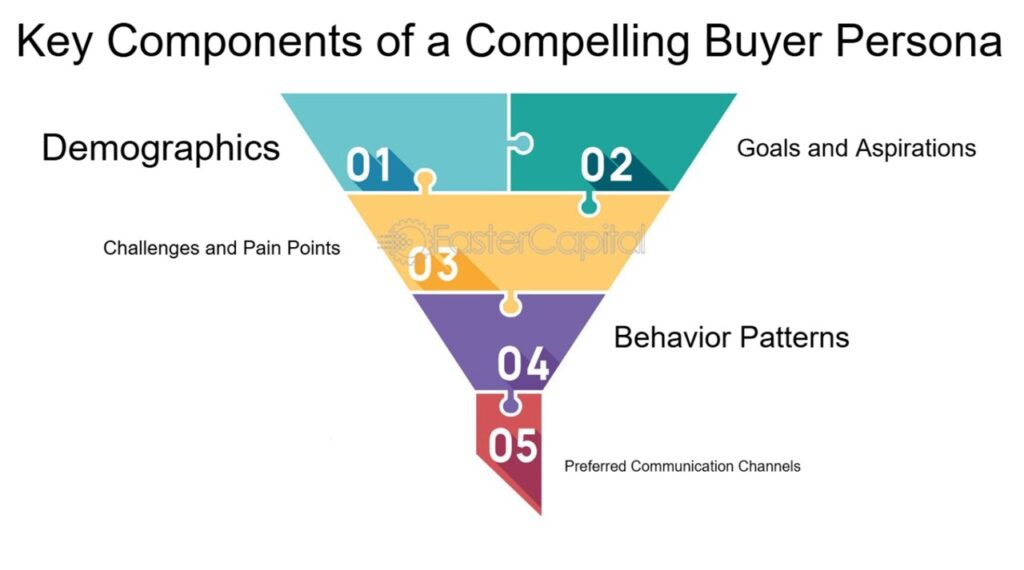
Here’s how you can get clear on your customers.
- Talk to your past clients — look at the last 10 jobs you booked. Who were they? What were their goals? Did they call in a panic or ask for a quote weeks in advance? Take notes on the common traits.
- Group your services — break things into chunks like “emergency repairs”, “new installs”, or “regular maintenance”. It shows you who’s asking for what.
- Ask better questions — instead of just name and phone number, ask if it’s urgent or if they’re planning something. This gives you clues about what they need before you even start.
- Check what people are typing into Google — if someone searched “garage door stuck halfway [your city]”, they probably need you right away. If they searched “best garage doors for modern homes”, they’re shopping around. Use those words in your content.
- Create a few simple customer profiles — You don’t need a big report. Just write down a few key types of people.
When you know who your best customers are, everything else falls into place.
You’ll speak their language, offer what they care about, and stop wasting time on leads that don’t go anywhere.
Tip #2 — Set up suburb-based location pages to nail your local SEO
Local SEO doesn’t cost anything but a bit of time.
But, once it’s set up properly, it can bring in steady leads from people who are already nearby
Most of your local competitors are only half-doing it, so even a few simple updates can help you stand out.
Others bring in someone or get help from garage door SEO services to handle the heavy things for them. This lets them focus on running the business.
But if you want to DIY it, start with your Google Business Profile (GBP).
If you haven’t claimed it yet, that’s step one.
Then, once it’s yours, take time to fill it out properly and optimise your GBP.
Showing up in Google’s map pack, or those top three local listings with reviews, maps, and call buttons, is where most of the clicks happen.
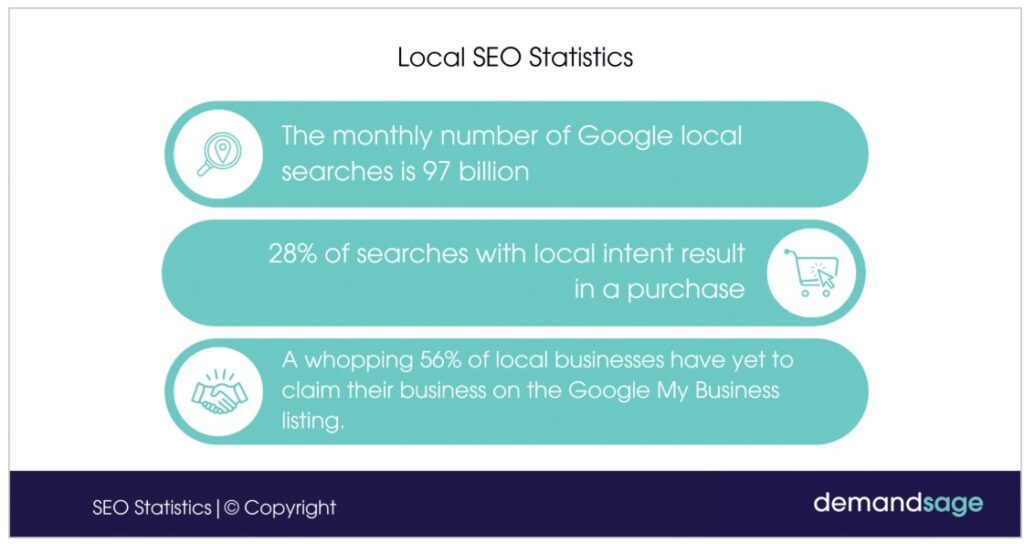
Then, try ways to improve your local SEO. Make sure you include your location in your content.
In your website copy, service pages, and photo captions, clearly say where you work.
Phrases like “serving homes in [Suburb A], [Suburb B]” help Google and customers match you to local jobs.
Do the same on your social media and Google Business posts.
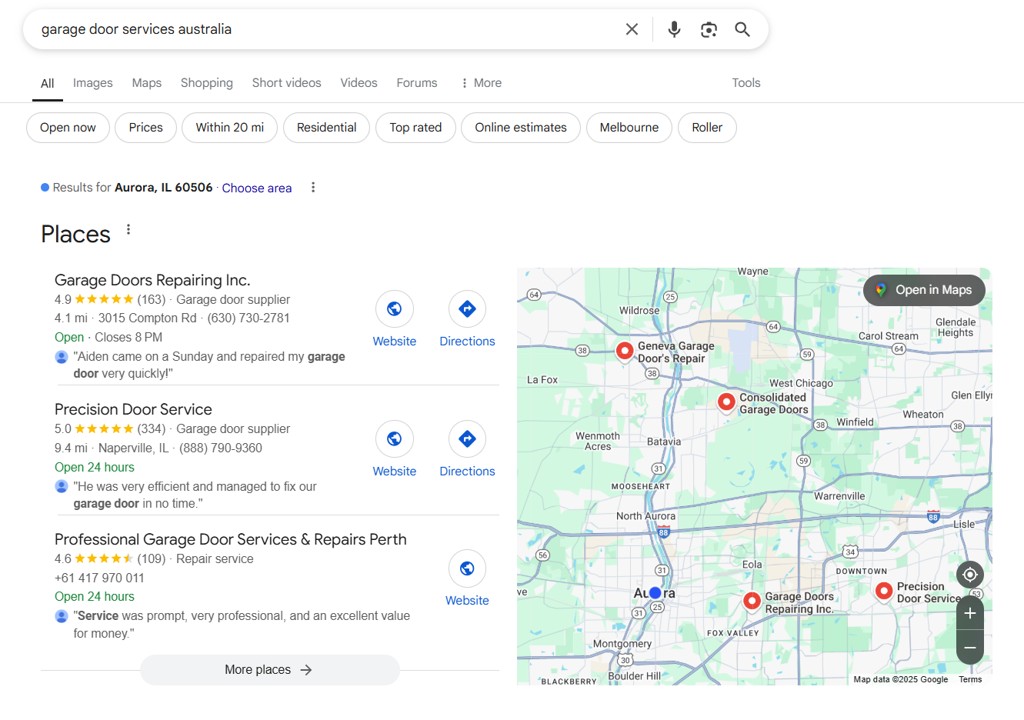
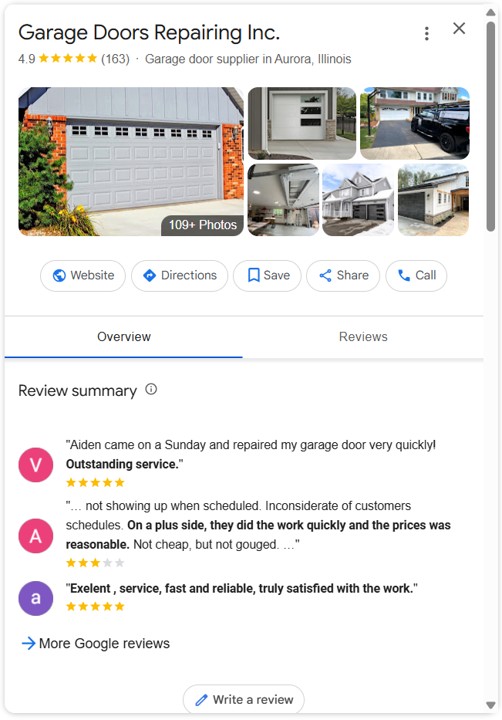
It’ll also be good to post real photos from real jobs.
Upload before-and-after shots, your van parked on the street, close-ups of broken springs, or your team at work.
These help people trust you and count as fresh content for Google.
If possible, ask every happy client to leave a review.
Once the job’s done, send a quick message with a link to your review page.
Ask while the experience is still fresh.
Reviews that mention street names or suburbs can even help you show up better in search.
Your name, address, and phone number (NAP) must also match everywhere.
Even small differences like “St” vs “Street” can confuse Google and hold you back.
Go the extra mile and list your business in local directories.
Add your business to trusted places like Yelp, Bing Places, and any local trade or chamber of commerce directories.
These are called citations.
Improving your local citations gives Google more reasons to trust your site.
Tip #3 — Build a simple, conversion-focused website
Your website doesn’t need flashy graphics or animations.
When someone lands on your site, they should know three things within seconds: what you do, where you work, and how to get in touch.
Everything else should support that.
Use simple, local headlines that highlight the pain point or pressing problems.
Lead with what your customer is likely struggling with.
A headline like “Garage Door Won’t Open? Same-Day Repairs in [City]” speaks directly to their issue.
Keep it short, clear, and focused on a real need. Let people know you understand the problem and have a fast solution.
Next, create a separate page for each core service like “Garage Door Spring Replacement”, “New Door Installations”, or “Emergency Repairs”.
It helps with SEO and gives people the exact info they need.
On each of those pages, add a short location-based line like “Serving homes across [City], [Suburb A], [Suburb B], and surrounding areas.”
It’s simple, but it helps with local SEO and lets visitors know you’re nearby.
Use this line in both the page copy and the meta description where possible.
Make sure that you also have trust-building sections.
Show reviews from real customers. Include badges if you’re certified or insured. Display logos of brands you work with.
These small things build trust fast.
Add a contact form that’s short and to the point.
For example, you can add name, phone, short message, and a dropdown like “Repair” or “Install”.
Make sure your phone number and email are in your header and footer, so they show up on every page without people having to look.
You can also use sticky buttons on mobile. Have a “Call Now” button that stays visible as people scroll on their phones.
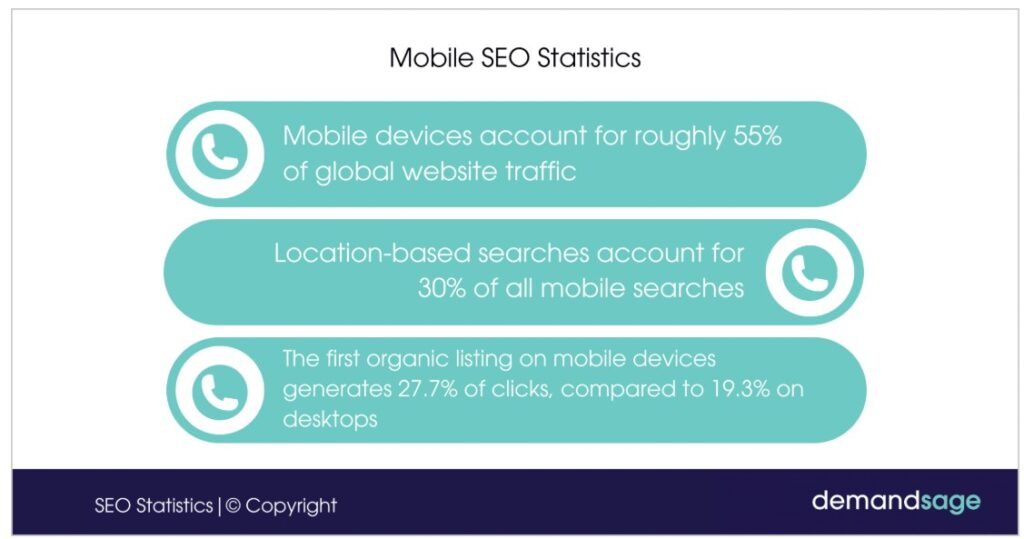
This is helpful since most people will visit your site from their phone.
Statistically, around 55% of website traffic comes from phones.
So if your site’s not mobile-friendly, you’re losing out big time.
That way, they don’t have to hunt around to reach you.
And remember, people don’t like to wait.
If your page takes 3 seconds to load instead of 1, the chance they’ll bounce jumps by 32%.
Just a couple of seconds can cost you a ton of clicks.
So, always check how fast your site really is.
You can run it through tools like Google PageSpeed Insights, GTmetrix, or Pingdom.
They’ll show you how long your pages take to load — and where you can speed things up.
Also, use a tool like TinyPNG to compress images.
Avoid heavy plugins so your site won’t be too slow to load.
Tip #4 — Show up in Google with FAQ schema and quick answers
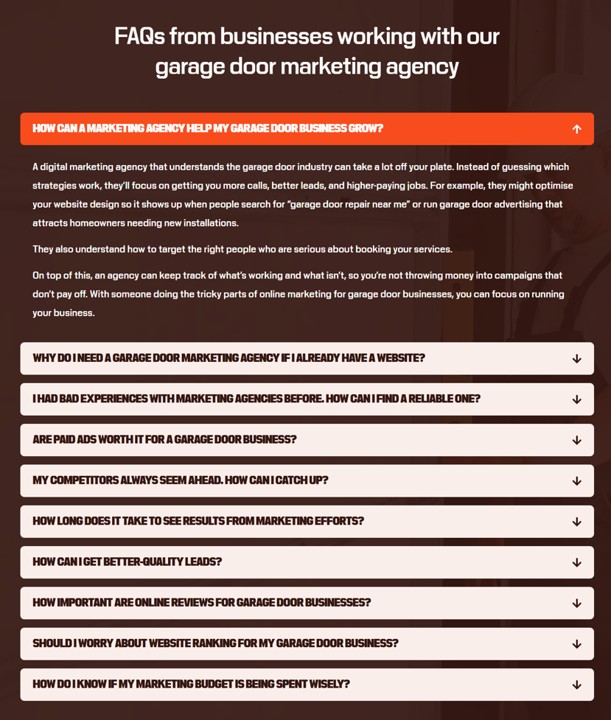
To make it more helpful to your target audience, add a small FAQ section.
Put it near the bottom of your homepage or on each service page.
People often type full questions into Google when they’re looking for help.
So stick to questions that answer what people usually ask before calling you.
For example:
- Do you offer same-day service?”
- “What areas do you cover?”
- “Do you install new garage doors?”
- “Do garage door repairs cost extra on weekends?”
- “How long does it take to install a new garage door?”
- “Can I open my garage door if the spring is broken?”
If your website answers these questions clearly and you use the FAQ schema.
This way, Google can feature your answers directly in search results.
That gives you more space on the page and builds trust before people even click.
An FAQ section also helps people make faster decisions.
It cuts down unnecessary phone calls, filters out low-intent enquiries, and makes your site more useful to visitors.
Over time, it lifts conversions because it clears up doubts before they reach out.
To add an FAQ section, you don’t need anything fancy.
A simple heading like “Frequently Asked Questions” works fine.
Start with the ones you hear every week so you can choose real questions.
Look through past enquiries, contact forms, or Google’s “People also ask” feature to find more.
If your site uses a website builder like WordPress, Wix, or Squarespace, they all have built-in accordion or toggle sections you can use to keep the layout clean.
If you want to take it a step further, use the FAQ schema.
This adds special code in the background that tells Google about the list of questions and answers that you have on your site.
You can add an FAQ schema using plugins like Yoast SEO, Rank Math, or manually through JSON-LD if you’re comfortable editing code.
Make sure each question and answer is clear and matches what’s visible on the page.
And don’t stuff it with keywords or make it sound robotic.
Google can detect that and ignore it.
Lastly, keep your FAQ section updated.
If people keep asking something new, like about warranty, payment types, or lead times, add that in.
A good FAQ gives you a second shot at ranking, makes you look legit, and gets more people to call you over someone else.
Tip #5 — Add a booking form that filters out time-wasters
Not every enquiry turns into a job.
Some are just price-checkers.
Others don’t know what they need.
And a few are just wasting time.
A smart booking form helps you sort them out early.
It shows you which leads are ready to book and which ones still need a bit more info.
It also saves time for both sides.
To build one that actually helps, stick to short, targeted fields.
You’ll only need:
- Full Name
- Suburb
- Phone Number
- Type of service (you can use the dropdown)
- How soon do you need help? (radio buttons: “Urgent / This week / Next 2 weeks / Just researching”)
- Short message box
That one extra question about how soon they need help tells you a lot.
It shows who’s urgent and who’s just looking.
Then, group your services into options, like emergency repair, motor replacement, new garage door, and quote only.
This filters the jobs automatically and helps you plan your day better.
You can jump on urgent ones faster and avoid holding up people who need help now.
If you’re using Jotform, Typeform, or something like Gravity Forms on WordPress, add conditional logic.
This lets you ask better follow-up questions based on what they picked.
For example, if someone selects “Emergency Repair”, show a field that says, “Is your door stuck open, closed, or off the track?”
Then, after they hit submit, send an automatic thank-you.
Let them know you got the message, when to expect a reply, and drop your number again in case they’d rather call.
Use tools like Zapier to automatically send the form data to a spreadsheet, Trello board, email inbox, or even your job management tool.
This way, nothing slips through the cracks even if you’re on-site when it comes in.
Add a CAPTCHA to stop spam if your form is public.
A smart form doesn’t just help people reach you.
It also helps you stay sharp, save time, and book better work.
Build it right and stay booked
Running a garage door business takes more than doing good work.
The best service won’t matter if the right people never find you.
That’s what this guide is about.
You need to set up the right pieces so your business can keep moving forward without depending on luck or last-minute jobs.
It starts with understanding who you want to work with.
Then you build around that… local visibility, a clean website, and clear messaging
There’s no need to overthink it.
Pick one area, get it working, then move on to the next.
Over time, those small moves add up to a business that stays booked and keeps growing without the panic, the dips, or the guesswork.
And if you’re short on time or just want it done right, don’t be afraid to bring in someone who understands the garage door industry.
The right garage door marketing agency or consultant can handle the marketing while you focus on running your business.
